I don't know how you all came in to church this morning, but I came in provoked. I was provoked this morning, and no one else was here to provoke me. Let me explain. It's been a joy and a pleasure and part of just routine for me to get here on Sunday mornings between 5 and 6 a.m., and so I'm here first, right, so who provoked me, I'll tell you. I park out there, right, in the field, and I never walk in between the bushes. There are spaces between them, but what's between them always? Spider webs, right? No, no thanks. I can deal with lots of things, not a fan of spiders. So I go around, I walk by the dumpster, but it just so happens that there is a tree limb out there. I'm trying to raise those up now, but it's getting a little too close to the ground, and sure enough, there was a web going from the bottom of this limb to the ground, and not just like, you know, you walk through some spider webs, and it's like, oh, that's annoying. It's like, you know, it feels soft, right? It's like cotton candy strung out too long. It's sticky, gross, right? This felt like fishing line, and it was not just a strand here or there. It enveloped my head, like it was every strand on it. I walked through a nest, I felt like, and sure enough, it's pitch black, right, and I'm holding stuff, I drop everything, and you know, when you see people in public who just walk through a spider web, it looks funny, because you can't see the web, and you just see them freaking out. Well, that's what I was doing at like 5.30, right there by the dumpster, and I knew only a big spider can make a web that feels like fishing line. And so I'm walking in, and I'm looking around, and I'm like, where is this thing? I don't find it. I come in here, put down my stuff, try not to freak out, you know, but I'm itchy everywhere, right? This just happens when you think about this stuff, and I go into the bathroom, like, I'm going to find this thing. I turn on the light, and immediately, dangling outside my shirt, which was untucked at the time, was the spider coming out of my shirt from the inside. Yeah, and so I was like, woo! That's what I did, and it was like the size of a quarter, almost. Oh no, and I just went, boo! So I was provoked on the way in. Spiders. No, no, no, no, nope, didn't happen. But then I sat down at my desk, and started looking over things. I always leave the conclusion of the sermon until early morning, so I'm sitting there looking through stuff, and I look, I see movement over to my left. On the ground, there's a bigger spider than this thing, it's like half dollar size now, on the ground, just like. We looked at each other in like a standoff like this, and I was like, what is happening today? And then I went to go, like, get it, and it's behind my shelves somewhere now, in there. No, I couldn't find it. It's on the chairs somewhere, just so you know. But needless to say, I was provoked on the way in here. Why share this?
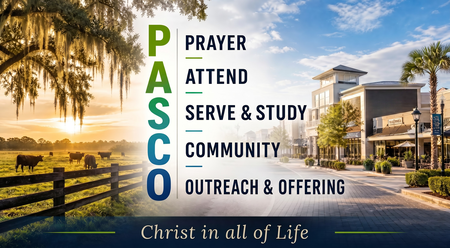
It's crazy what happens when we walk into church sometimes. But in our passage today, how's the segue going to happen here, right? We are called to provoke one another in all the good ways. Not in any bad ways. We are to be this for one another. How? By attending church. So many of you know, some of you are first time today, maybe you don't know, we are breaking our current sermon series going through Exodus, and we are now looking at Pasco. Not the county, but each letter stands for these various disciplines in the Christian life.
And today we come to the A, attend. So the point is very simple today. You should attend church. And you all get it, because you're here, right? Praise God for that. You at home, everybody turn around, look at the camera. We're all talking to you. You're not alone. not here, please let's see you next week, yeah? This is for all of us by way of reminder and you at home to get away from home and to come here. Now, I want to look in to Hebrews chapter 10 verse 19 to 25. In this passage, there is so much richness, but the final point, the final point in view, there's a therefore in verse 19 marking a huge shift, a mention of our great privileges in Christ and then a mention of three duties that we must give ourselves to as Christians because of our great privilege in Christ. Notice what completes the list in verse 25, do not neglect gathering together. Now, I could, right, choices are available. I could just focus on verse 25 and like browbeat you all about attending church. You should be at church, right? I'm not going to do that. I do want the weight of church attendance to land on you and the burden of it to burden you, the glorious burden of coming with the church and doing life with the church anytime the doors are open, yes.
But verse 25, there are 24 verses before it. And in context for us, it is the end of an argument that begins at verse 19. I am convinced that you will get the weight of do not neglect the assembly of God's people. If you see it in flow of the argument rather than just picking it out of its context because a passage only has meaning in its context. So that's where we're headed this morning, hoping to provoke you in all the right ways.
Two headings as we go through it, you'll see it on the back of the bookmark. It's a very detailed bookmark today, an outline. There's main points, minor points, but notice the two main ones. First, our privileges in verse 19 to 21. Second, our duties in verse 22 to 25. Let's start first, our privileges. Verse 19 to 21, Hebrews 10 says this, therefore brothers, since we have confidence to enter the holy places by the blood of Jesus, by the new and living way that he opened for us through the curtain, that is through his flesh and since we have a great priest over the house of God. Let's just stop there. Don't you love how verses sometimes interrupt sentences? Let's look at our privileges, but first notice, what does verse 19 begin with? Therefore, this lets us know that a shift is now happening. Generally speaking, I can say from Hebrews chapter 1 verse 1 to Hebrews 10, 18, the majority, most all of those verses are a rich theological explanation and exploration of why Jesus is better than everything that has come before. He's better than the old covenant in the new covenant. He's better than the old priesthood, being the priest. He's better in his atonement. In his atonement, his cross does what the law cannot do. That's what this first section says. In verse 19, the author wants us to know that all that doctrine is not just a mere intellectual exercise. Yes, we need to know God rightly, and that's what that helps us do, know God rightly. But here, there's a shift to here's how we know God rightly to here's how we live for God faithfully. So all this doctrine doesn't just transform the mind, it's meant to transform the life. Well, how does this doctrine change us?
- Our Privileges (v19-21)
The author will tell us by our privileges. Verse 19 to 21 has two of them. They both begin, notice, since we have. Since we have. There's no if in this text. Do we know the difference between if and since? If there's possibility in view. This might be true of you, it might not. Since certainty is in view. This is true of you. So these are our great privileges. There are two of them. See the first one in verse 19 and 20. Since we have access. This first privilege is all about access. To understand the words that are used here, we need to understand something of the Old Testament. usage of these same words. Back then, access to God's presence, we can generally say, was severely restricted. Only once a year on the Day of Atonement and only the high priest could enter in beyond the veil into the most holy place by the blood of sacrifices. Sacrifices first for his own sins, sacrifices for the sins of God's people. This curtain and veil then was a block that separated the priest in the most holy place and the people outside of God's presence. The veil and curtain was a visual reminder of how distant God was from his people. But hear it, everything changed with Jesus. There's a sermon of itself in there, right? But Jesus. Everything changed with Jesus. It's the whole message of our faith, isn't it? That through the work of Christ, the way that was now shut is now open for anyone to come to the Father through the Son, by the Son. We can come. The tearing of the veil at the crucifixion from top to bottom, symbolizing from heaven to earth, the way is now open back to God through the Son. Look at how these verses talk about this, right? When we study scripture we should not only mention what is said, we need to understand how does it say what it says. In verse 19 to 20 it says, we can draw near confidently by the blood of Jesus. So it's not our own works that we can come to God, but only by the blood. His blood makes a way by cleansing us from sin and making us acceptable to God in his sight. It also mentions that we have access. This way is called new and living. The new and living way. Why is it new? It's new not just because it's not old. I mean, that is true. That's like, you know, low-hanging fruit right there. It's new because it supersedes the old. It surpasses the old. The old covenant had a glory. Jesus has greater glory. This is the new way. But it's not just new. Part of its greatness is it's the living way. Why is this the living way? Well, the Christ who died and shed his blood is also the Christ who rose. And every dead sinner that comes to the Christ who rose, also in Christ, has a resurrection of their own. He makes the dead alive. So this is the new and the living way. The phrase, through the curtain, that is, through his flesh, it says, refers to Christ's body. His body, broken for us, was the means by which the barrier between God and us was removed.
So for all those who believe in Jesus, his death is the way to life. His death is the way to life. We now have access. We have access. We can now approach with confidence. That's one of the key words here. Does this describe you? Are you confident in your approach to God? Not talking about a swagger or a strut in yourself, but confident in someone else's work for you. This is how Christians approach God through the Son. Privilege one, since we have access. Notice now verse 22. Privilege two, since we have an advocate. This second privilege is all about advocacy. Here we see more of the glory and the beauty of Christ. He, unlike the priests of old, Jesus is our eternal, sinless, and perfect priest. This means the very one who opened the heavenly way himself is in heaven himself, as our heavenly priest, working for us still. We know his work on earth, in his earthly ministry, in his living, his dying, his rising, his ascending, but he ascended to a throne where he works still, interceding, praying, pleading for his church before the Father evermore. So on our best days, and on our worst days, we have an advocate. And in our advocate, we have access to heaven. These two privileges then, are our dual source of confidence. Just like opposing that, those two spiders this morning were my dual source of provoking. If another one comes out, let me know. These are our dual source of confidence before God.
This does something to us. We've already said it. It makes us confident. If you're confident in your approach to God, praise God. You know this. You know your subjective experience ebbs and flows and rises and falls, but you know objective truth is greater than what you feel, than what you experience, that you can bank a life on this. And so when you come before God, you come, and you're like, I'm home, let's talk. And you commune with the King.
But not all of you do this. You come with shame and with guilt. And you come timidly, not sure if you'll be welcome or not. If that's you, I'd encourage you to remember the song we sang this morning, specifically the third song, before the throne of God above. When Satan tempts me to despair and tells me of the guilt within, upward I look and see him there who's made an end of all my sin. That can make you confident. When you look at yourself, if you're looking rightly, and if you look long enough, you will find thousands of reasons to be disappointed with yourself.
But if you look to Christ, you'll find millions of reasons to be confident in your approach to Him. This is what's in view. We have privileges as His sons and daughters. We have access because of our advocate. That's how the passage begins. And it's curious it begins like that, because really, verse 19 to 22 is a summary of the entire beginning of the book of Hebrews. Now we turn. As great as those privileges are, those privileges demand much of us.
They lead to duties, three of them. So let's look at that now, our second heading, it's where we'll lean in the most of our time. Hebrews 22 to 25, our duties. Let us draw near with a true heart in full assurance of faith, with our hearts sprinkled clean from an evil conscience and our bodies washed with pure water. Let us hold fast the confession of our hope without wavering, for He who promised is faithful. And let us consider how to stir up one another to love and good works, not neglecting to meet together, there it is, as is the habit of some, but encouraging one another, and all the more as you see the day drawing near. So the privileges are established, and each of them began with, since we have.
- Our Duties (v 22-25)
We now come to our duties, and notice each of them begin with, let us. I call them duties, they're really commands. They're more than invitations. They're more than duties. These are what we're, this is what we're called to live like. Let us, there are three of them, see the first duty. Let us draw near. This is the immediate and personal response to our great privileges in verse 19 to 21. If we get and understand all the goodness and richness and the robust security that we have in Christ, what's our response?
We're rushing to the throne. We will want to draw near to God. This is what Christians do. They want to be near to God. So to draw near means actively, intentionally, living near the Lord. But notice if you look closely at verse 22, it defines how we're to draw near. It gives us three descriptions of what we're to draw near like. Notice first, we draw near with a true heart, a true heart. What is a true heart? Well, it's not a false heart.
That might be easy to say. But we could say, sincerity is in view here. A genuineness is in view here. That in our inner life, our spirituality, it must have an integrity about it. An authenticity that when we draw near, we put away hypocrisy. We put away deceit. We come as we truly are. This pleases the Lord. And second, we draw near in full assurance of faith. Just like confidence before, now assurance here.
What kind of assurance is in view? Tiny assurance, little bit of assurance, full assurance of faith is in view. This means it's not a timid approach and we draw near to God, but one that's marked by gladness and certainty. Again, when we look at ourselves, we have thousands of reasons why we should be lost. When we look at Jesus, we have millions of reasons why we can never be lost. This gives us assurance. We draw near in that heart. Third, we draw near with our hearts sprinkled clean and our bodies washed. This imagery, of course, does not come from the Baptist denominations because there's a sprinkling mentioned. Some of you got that. This imagery comes from Old Testament purification rites. As the Old Testament high priest would come in on the day of atonement to the most holy place, he would sprinkle the altar with blood to signify atonement being made. Then after that, as Moses comes out, chapter nine talks about this in Hebrews. As Moses came out to the people to ratify the covenant, to affirm it, you are in covenant Israel with God. He took blood and sprinkled it on the people saying, you are forgiven, you are his. This is what's in view here.
For us, we can say it's a greater than those things because it's the blood of Christ. The blood of Christ that washes us, white as snow, renewing us and cleansing us by getting rid of all our sins. Then we see the washing of our bodies with pure water. It points not merely to baptism, but we can say it points to that which baptism points to, right? You follow me there? This is not baptism in view. It's what baptism points to is what's in view. An outward washing that preaches a sermon about inward cleansing by the blood and filling
of the Holy Spirit. We draw near to God with hearts sprinkled clean and bodies washed. What effect does this do in verse 22? It cleanses the conscience. You see that? You know that little voice that never shuts up? That voice that always tells you how horrible you are, that you can do better. Try harder, you bum. That's the conscience. The blood of Jesus calms the conscience.
What a gift we have. So this first duty is a call to come near to God in these ways. But I fear that maybe you don't understand what's going on here. Drawing near to God is not something that some Christians do and some Christians don't do. You hear me there? This is not a duty that like, oh okay, this is what mature Christians do, I'm just a normal Christian. No, no, no. This is what Christians do.
If you're a Christian, you will desire to be near the Lord. How can I say such things? The Old Testament promises in all the promises about the new covenant that this reality will be experienced by those within that covenant. Ezekiel 36 says it like this in verse 26-27, I will sprinkle clean water on you and you shall be clean from all your uncleannesses and from all your idols. I will cleanse you. I will give you a new heart and a new spirit I will put within you. I will remove the heart of stone and give you a heart of flesh. And notice, I will put my spirit within you and cause you to walk in my ways and to obey
my rules. to all those in the New Covenant. All those in Christ. Our Covenant Head. Because His Spirit is within us, what should we find happening? Us walking in His ways and obeying His rules. This type of drawing near to God is promised and realized in everybody in Christ in the New Covenant.
So if you're not desiring to draw near to God, you're either incredibly unhealthy as a Christian, and in need of much examination and why you're so hard to these things, or you're not a Christian. Christians want to be near their Lord. So we are commanded to draw near. And when He commands, it is our delight. That's our first duty. Second, let us hold fast.
The second duty is in verse 23. And it's true and hits us so powerfully because we live in a world that is constantly trying to wear out our grip. It constantly challenges our beliefs. And so perseverance is important for us. It's massive for us. We are to, quote, hold fast the confession of our hope without wavering what's in view here.
What is confession? Hold fast our confession. Hold fast what we believe. This is right doctrine, orthodox truth. This is what we believe. To that, I want to hold fast to that. Without wavering. This is more than merely intellectual work. This is a glorious, stubborn loyalty to Christ that refuses to give up
regardless of what the culture is doing. Earlier in Hebrews, the author mentions this in chapter 6 when he says, we have this as a sure and steadfast anchor of the soul. A hope that enters into the inner place behind the curtain where Jesus has gone as a forerunner on our behalf. And here later, he talks about hope.
Hope for us, according to this author, is an anchor. Think about that. Hope as an anchor. No sailor would ever set sail in a ship that had no anchor. Because all seasoned sailors know that when everything else fails and they need to rely on something to keep them steady in the midst of storms, they don't rely on the captain or the crew. They don't rely on the sails or the engine.
They rely and look to the anchor that in the midst of a storm can hold them steady. Such is to be our grip on our confession. We're to white knuckle what we believe. But do we have a very strong grip? Maybe for a time we can squeeze it out, right? Look at how verse 23 ends. So glorious. We can hold fast not because we're so strong, but because God is so faithful.
This gives us a deep assurance that our hope, that our holding fast on our hope, will never fail. Because yes, we're called to white knuckle our confession of faith, what we believe, regardless what the culture says and progress says this or that. We're to hold fast.
But praise God that at the end of the day, we will make it to the end because Jesus has a tighter grip on us than we will ever have on Him. Now we finally come to it. Our A in Pasco. Duty number three. Let us consider. This final duty, we arrive at the attending in our acrostic.
And here, notice in verse 24, 25, there's a move, there's another shift from individual discipline to wider community responsibility. Until this point, you can pretty much interpret this individually, individualistically. This is me and God. You get to this verse, that's out. the window. This has to do with all of us now and our vital role that we play in
one another's spiritual growth. Look at what it says, let us consider how to stir up one another. Some of your translations say something different. The word stir up in Greek could also be translated provoke. Some of you are really good at provoking other people. I know this, I have been provoked by you and I have provoked many of you. The spiders provoked me this morning and not in good ways. Still, I'm hoping one doesn't come out of my sleeve, right? It's whole family in my shirt, I feel like. This sheds a new light though on what we're to do with one another, right? Provoke one another, not to anger, to envy, to anything evil, but provoke one another to what? To love and good works. Works. We're not saved by our own works. God doesn't need our works, we're saved
by the works of Christ, amen? But you know who needs our works? One another. I need your works. Our neighbors need our works. This is what's in view. This implies intentionality, thoughtfulness, and active consideration on how we can grow love in each other, for each other. And this is not just love and a sentimental like, oh I love my church. But it's a love that actively works for one another spiritual betterment, spiritual maturing. How do we do this? How do we do this? How do we provoke one another in this? Or maybe a better question in view of the text is, when should we do this with one another? That's when verse 25 comes in. You see it? When are we to provoke one another? When we gather together. When we gather together. There it is! In verse 25 the author connects intentional provoking
for the good of one another with our gathering together. So the call to provoke in verse 24 is to happen, verse 25 says, in our assembled gathering. That's the context in which we are to be positively irritating to one another in all the right ways. Therefore we should not neglect to meet together, as is the habit of some. But encourage one another and all the more as you see the day drawing near. If you've ever wondered, here it is. This is the direct biblical command that you should attend church. This is the direct one. Christians attend church. In other words, no Christian can exist for himself or for herself. Rather we are our brothers and sisters keeper. The word neglecting. What images come to mind? For me, it's my brakes on my car. I hear the squeak. What do I do? Radio up a
little bit. Yep, right, that's it. I neglect. To neglect something means to, I'll deal with that later. I'll put it aside, knowing it's important. While knowing it's going to cost me more later on. Neglecting is in view in verse 25. It's a deliberate choice to say no to something not only good, but something that you need to do. A deliberate choice is made. Nope, not for me. Even though you know you should say, yes, that's for me. And notice in this original audience, the church in view here, some were making this choice to neglect to meet together. You know why? It says, as is the habit of some. So some used to be present with this congregation and now they're not. They've made the deliberate choice to neglect gathering together. Begs the question of why? Why are they doing that?
Perhaps they've grown indifferent or apathetic. Horrible reasons. Perhaps they got busy with their own affairs, another horrible reason. Perhaps they were afraid of persecution so rampant around this church during the first century. Understandable reason, still horrible reason. Whatever it was, for some reason that made sense to them, they deliberately chose to stop attending church. And what was the result? They missed out being gloriously and godly provoked. And who else missed out? Everyone else missed out on being provoked by them.
For His absence means He can provoke no one but Himself. So by being absent, they couldn't play a vital role in anyone else's spiritual growth. They couldn't be positively godly irritating in all the right ways. So then ask the question of you. This was the habit of some. Is it your habit? Is it your habit? Is it growing in that direction? Do you feel like, oh, church is good, but maybe I'll start coming again every week in August when we get back in Exodus.
You're silly if you say this, but you're like, oh, Adam's not preaching as much in the summer. That's ridiculous. The elders are pastors. We share authority here. That's not a good reason to not come in the summers. The statistics, too, if you put them together out there, popular statistics, are horrible. Seventy percent of modern Christians do not attend a church regularly. That tells me either they're not Christians or this is the reason why the church is so worldly because the Christians just aren't there. They're out in the world.
They're at sporting events. They're fishing. They're doing something else. We all make time for what we think is a priority. This is priority number one. But this begs the question, why have you perhaps neglected the gathering? Perhaps you've grown apathetic and indifferent. Perhaps you've gotten busy with your own affairs. Perhaps you're embarrassed to be a Christian in the modern world. Perhaps you've been hurt by the church.
More understandable, but still inexcusable, because remember, from the pastor down to the nursery, there's one type of person in church, sinners. In one sense, church hurt is like, oh, let's work through that. Let's dredge it up. We can deal with it. Let's process. Let's move on. Let's let you come back. On the other hand, I'm like, what'd you expect? Sinners sin.
Or perhaps you've grown so cold to the gathering because in private places in your heart, you've grown so warm to sin. And you don't want to come on Sundays and just hear how poorly you're doing as a Christian. Whatever the reason, no reason is good enough. Come back. Come back. No reason is good enough. This is, after all, have we forgotten God's idea? I mean, how kindergarten is that? It's not like the elders got together and we're like, hey, Anthony, David, Sam, let's
tell people they should attend church. Oh, yeah, that's good. Let's do it. This is God's idea. It's not ours. And because it's His idea, it demands our attention. When you neglect to gather together, you're not just losing out. All of us are losing out. When you neglect to gather together, you're in sin because this is God's idea. What does repentance look like?
Coming back, rejoining into the life of the community. This is a necessity, a means of grace where we are encouraged, instructed, loved, prayed for, held accountable, and bolstered to keep going. So, I mean it when I say it, a Christian who gets our privileges in Christ, unless providentially hindered should be at church every time the doors are open. And if you're not, you're thinking wrong. If you're not, you settled for a lesser Christian life. The church is more the side dish rather than the main course. How can I speak so strongly? You're like, geez, really?
Look how verse 25 ends. It like raises the bar another level when it says, and all the more as you see the day drawing near. Don't you love how the word day is capitalized? A day, we are all looking forward to so much. This is the return of Christ. As his return draws near, the logic is our commitment to gathering together grows more intense. When will he return? In the end, right?
We're all in agreement on this. Whatever eschatological position you hold to, he returns in the end. Hebrews chapter one has already told us that we are living in the last days where all kinds of challenges will arise for the church, pressuring them to give up their hope and give up their faith lesson. It's now time to raise the bar with commitment to the local church. We are called to this. And so I mean it when I say it, a Christian, unless providentially hindered, should be at their church anytime the doors are open. Not because we're so great, but because we need one another to make it to the end.
I wonder if you just have felt this or seen this in the passage today, just take like a, go higher elevation and look at our text. You know why I didn't begin with verse 24 and 25? Well, I didn't want to make you all feel guilty and browbeat you, but also because that's not where the text begins. Where does our passage today begin? It begins with Jesus. It begins with Jesus. The command to gather begins with a Savior whose blood made a new and living way. A Savior who is our advocate and high priest pleading our cause before the Father.
Because of that, how then shall we live? We draw near to God, we hold fast to our confession, and we gather together. This is the Christian life. So when the church gathers, we're not merely attending an event, we're responding to what Christ has done and what He is doing, waiting for what He will do. That's the meat and potatoes of our gathering. And every gathering is proof that Christ is still building His church. And every gathering is an opportunity to be positively irritating to one another, provoking one another in all the right ways. As we all, as the church, look forward to the final day when there will be the eternal
gathering. On that day, a trumpet will sound, the skies will part, the Lord will descend, faith will become sight, the church that is now scattered in all the nations, tribes, tongues, and languages will gather together before the throne. And on that day, there's going to be no empty seats, there's going to be no missing attenders, and there's going to be no disinterested people just like, when is this over? We will all be feasting before the King for all eternity on that day. This day is a foretaste of that day. Let's get ready for the great day to come. Hebrews says, this day is drawing near.
So until that day comes, let's not neglect the gathering. Pray with me. Thank you for listening to the Sunrise Community Church podcast. We pray you are blessed by the preaching of God's Word. If you would like more information about our church, please visit our website at sunrisecc.com. May the grace of our Lord Jesus Christ, the love of God, and the fellowship of the Holy Spirit be with you all. Amen. Complete transcription result saved to: /home/ubuntu/upload/Attend_transcription_20260615_151254.json Plain text transcription saved to: /home/ubuntu/upload/Attend_transcription_20260615_151254.txt
[2J[H[3Jmanus-speech-to-text --terminal-max-len-single=5000 /home/ubuntu/upload/Attend.mp3 Starting Speech-to-Text conversion... Audio file size (66.6MB) exceeds limit (5MB), downsampling audio file... Source audio bitrate: 192 kbps Bitrate exceeds 128 kbps, downsampling... Downsampled audio file size is 44.42 MB. Downsampled audio file size still exceeds limit (5MB), splitting audio into chunks Audio file size: 44.42 MB, duration: 2911.3 seconds Splitting into 9 chunks (each ~323.5 seconds, max 5 MB)... Successfully split into 9 chunks
Audio file split into 9 chunks for batch processing Transcribing audio file: /home/ubuntu/upload/Attend.mp3, file size: 66.64 MB Transcription may take some time depending on file size and audio length... Chunk transcription progress: Starting batch transcription of 9 chunks... Transcribing chunk 1/9: /home/ubuntu/upload/.Attend_chunks_20260615_150802/chunk_000.mp3 Chunk 1 completed (duration: 323.5s) Transcribing chunk 2/9: /home/ubuntu/upload/.Attend_chunks_20260615_150802/chunk_001.mp3 Chunk 2 completed (duration: 323.5s) Transcribing chunk 3/9: /home/ubuntu/upload/.Attend_chunks_20260615_150802/chunk_002.mp3
Chunk 3 completed (duration: 323.5s) Transcribing chunk 4/9: /home/ubuntu/upload/.Attend_chunks_20260615_150802/chunk_003.mp3 Chunk 4 completed (duration: 323.5s) Transcribing chunk 5/9: /home/ubuntu/upload/.Attend_chunks_20260615_150802/chunk_004.mp3 Chunk 5 completed (duration: 323.5s) Transcribing chunk 6/9: /home/ubuntu/upload/.Attend_chunks_20260615_150802/chunk_005.mp3 Chunk 6 completed (duration: 323.5s) Transcribing chunk 7/9: /home/ubuntu/upload/.Attend_chunks_20260615_150802/chunk_006.mp3 Chunk 7 completed (duration: 323.5s) Transcribing chunk 8/9: /home/ubuntu/upload/.Attend_chunks_20260615_150802/chunk_007.mp3
Chunk 8 completed (duration: 323.5s) Transcribing chunk 9/9: /home/ubuntu/upload/.Attend_chunks_20260615_150802/chunk_008.mp3 Chunk 9 completed (duration: 323.4s) Snippet of transcribed content: Well, I didn't want to make you all feel guilty and browbeat you, but also because that's not where the text begins. Where does our passage today begin? It begins with Jesus. It begins with Jesus. The command to gather begins with a Savior whose blood made a new and living way.
A Savior who is our advocate and high priest pleading our cause before the Father. Because of that, how then shall we live? We draw near to God, we hold fast to our confession, and we gather together. This is the Christian life. So when the church gathers, we're not merely attending an event, we're responding to what Christ has done and what He is doing, waiting for what He will do. That's the meat and potatoes of our gathering. And every gathering is proof that Christ is still building His church. And every gathering is an opportunity to be positively irritating to one another, provoking one another in all the right ways.
As we all, as the church, look forward to the final day when there will be the eternal gathering. On that day, a trumpet will sound, the skies will part, the Lord will descend, faith will become sight, the church that is now scattered in all the nations, tribes, tongues, and languages will gather together before the throne. And on that day, there's going to be no empty seats, there's going to be no missing attenders, and there's going to be no disinterested people just like, when is this over? We will all be feasting before the King for all eternity on that day. This day is a foretaste of that day. Let's get ready for the great day to come.
Hebrews says, this day is drawing near. So until that day comes, let's not neglect the gathering.
Pray with me.