Introduction:
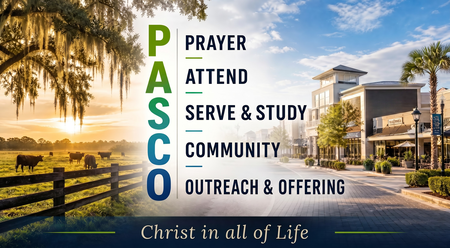
This morning I want you all to be aware of a common Christian disease. When it comes to giving, to our offerings we give to the Church, there is a common sickness found among Christians. One preacher calls it cirrhosis of the giver. Cheesy as that title may be, it’s a real thing. Those af icted with such a dreadful condition have symptoms that render one’s hands immobile when they pass by the offering box. They functioned ne before then, they may have even been raised in worship, but go near the place to give, and the hands seize up. The medicine for such a disease is easy. Simply keep such a person far away from the offering box and the disease goes away! Put them on a golf course, in a restaurant, or on a vacation, and their condition miraculously disappears.1 This is cirrhosis of the giver. As humorous and uncomfortable as this disease is, it is very common. But praise God, He desires to help us greatly this morning. After a long summer, and after hearing from many of our elders, today, I’m bringing our PASCO series to a close. Recall our aim in this series. These sermons are aimed at
A is for Attend.
S is for Serve and Study.
C is for Community.
O is for Outreach and Offering.
Today I'll be covering the last of these topics, “Offering” or the worshipful discipline of giving. So go ahead and open your Bibles to Mark 12:41-44. While our passage for this begins in v41, allow me to draw your attention back to 12:38-40 where we see Jesus warning against the scribes. He says this, “Beware of the scribes, who like to walk around in long robes and like greetings in the marketplaces and have the best seats in the synagogues and the places of honor at feasts, who devour widows’ houses and for a pretense make long prayers. They will receive the greater condemnation.” This is a dreadful evaluation from Jesus.2 The desire of these religious leaders to be seen in their long robes, to receive public honor, and to be heard praying their lengthy prayers is wicked, truly. But one item Jesus draws attention to, ought to draw our attention today. Jesus rebukes the scribes for “devouring widows’ houses.” What does that mean? It means these scribes, who were charged with a weighty responsibility, had not ful lled their duty but instead had exploited and manipulated those among their society who were counted as the weakest and most vulnerable, the widows. In other words, the scribes back then were acting like scammers today who prey upon the elderly, seeking to dupe them into giving them their money. For this, Jesus says in v40, “They will receive the greater condemnation.” That Mark places Jesus’ account of the widow’s offering directly after Jesus’ warning against the scribes, illustrates the difference between those who serve God hypocritically and those who serve God sincerely. The scribes’ religion is false and sel sh and vain, but the poor widow’s religion is beautiful, sacri cial, though it is lled with hardship.3 And more so, note that Jesus’ prophecy about the destruction of the Temple comes after the account of the widow’s offering in chapter 13. What does that teach us? The old is passing away, and the new is coming. Christ’s Kingdom will be lled with those who resemble, not the scribes, but this widow.
Now, let’s turn to the text before us, Mark 12:41-44. Two headings for us today.
The Lord’s Observation (v41-42)
“And He sat down opposite the treasury and watched the people putting money into the offering box. Many rich people put in large sums. And a poor widow came and put in two small copper coins, which make a penny.” As our passage begins we see Jesus sitting and observing. He’s doing what many of us enjoy doing in a crowded setting, He’s people watching. We tend to people watch to no good purpose. Whether it’s in a coffee shop, in the airport while we’re waiting for a plane, or just strolling through Walmart, our people watching tends to be very judgmental. Jesus’ people watching on the other hand, is very purposeful. His was no casual observation, but a careful one. What did He see and notice around the busy temple setting? He saw people putting money into the offering boxes. He’s witnessing the worshipful act of giving. Giving these offerings was established long before this moment. Right after Israel was saved out of Egypt God established the practice of giving gifts to God’s sanctuary.5 This practice continued all throughout Israel’s history, up to the rst century context here where Israelites still brought their offerings to the temple. This court, opposite the treasury, would’ve been a court set aside for the giving of offerings, with thirteen trumpet shaped offering boxes, for people to come drop their offerings into.6 Such was their custom. But think of it… every offering ever brought to that treasury, going back to Moses, was aimed at this moment. It was all pointing forward, to a day when God Himself would not just receive gifts from a distance, but would dwell among His people in the esh. And here, in this scene, He does. The God who commanded these offerings is not watching from heaven, He’s sitting mere feet away, in a body, carefully observing those who come. Speci cally, look at what Jesus sees. In v41 Jesus sees many rich people putting large sums into the offering box. And in v42 Jesus sees a poor widow putting in two small copper coins. Notice the rich givers in v41. This is stated as a simple fact, see that? There is no condemnation present here, merely observation. Which ought to encourage and instruct those of you who are wealthy. Here are the rich bringing rich gifts, as they ought to do. 1 Timothy 6:17-19 says, “As for the rich in this present age, charge them not to be haughty, nor to set their hopes on the uncertainty of riches, but on God, who richly provides us with everything to enjoy. They are to do good, to be rich in good works, to be generous and ready to share, thus storing up treasure for themselves as a good foundation for the future, so that they may take hold of that which is truly life.” As I said, in v41 Jesus makes only an observation, no condemnation, which gives the rich plenty of instruction on the duty richly giving.
Now notice the widow in v42. Having lost her husband she has lost her position, protection, and provision in this society. It states it outright by adding that she wasn’t just a “widow” but a “poor widow” con rming the hard state she was in. Mark says she came to give that day and Jesus saw her put in two small copper coins, which make a penny. The Greek word here for coin is lepta, and she put in two of them. The King James calls the lepta a mite, which is where the popular name the Widow’s Mite comes from. So you understand the amount, in this culture around 100 lepta was worth one denarius, which was a day’s wage. Lesson? In terms of quantity, this widow barely had anything, and barely put in anything. Especially compared with the rich mentioned in v41. But in terms of quality, Jesus has much to say about that in a moment. Church, see for now the simple fact that she gave. Yes, the temple had become corrupt, v38-40 says that clearly, but she still gave. She didn’t know where her money would go, or how it would be used, she simply did what she was supposed to do. Jesus was watching all of this. Church, be reminded, He’s always been watching and He’s watching still. When Cain and Abel made their offerings, the Lord was watching. When David’s men brought him that cup of water he asked for, a costly offering indeed, the Lord was watching. When Judas put money away for himself, bit by bit, the Lord was watching. When Ananias and Saphira lied about their offering, the Lord was watching. When the Macedonians gave beyond their ability, the Lord was
watching. And Church, He’s watching you when you give. He knows who gives a lot and who gives little to nothing. But He sees more. The Lord sees your attitude in giving not just the amount. He sees your money, yes, but He looks deeper and see your motive. That the Lord carefully observes us, ought to bring a weight to all our actions. But His careful observation, in this passage, speci cally brings a weight to our giving. So think Church. What about your giving? Do you give? What do you give? How do you give? Do you need to change your giving? History is full of well-known givers like the Carnegie’s and the Rockefeller’s. History is also full of givers no one will ever know as they give in secret or give not to be known or to receive applause. This widow outshines them all. Her offering has inspired countless others to follow her example.7 Why? See it for yourself in our second heading…
The Lord’s Commendation (v43-44)
“And He called His disciples to Him and said to them, “Truly, I say to you, this poor widow has put in more than all those who are contributing to the offering box. For they all contributed out of their abundance, but she out of her poverty has put in everything she had, all she had to live on.” Why does this widow shine so bright? It wasn’t because of the amount she gave, but the heart she gave it in.
Jesus saw in her an example which His disciples needed to learn from. See it in the text. In v42 Jesus says this widow gave more, and in v43 Jesus says this widow gave all. What does this mean? Is Jesus bad at math? Can He not clearly see that the rich gave more money than the widow? Of course He could see that. Well then, what do His words mean here in v43-44? He means this widow had nothing extra, no margin from which she could contribute to the temple, and yet, she still gave. The offerings of the rich would not be missed and would not cause hardship or discomfort for the rich, but the widow’s offering took food right out of her mouth.8 The vast majority of those who gave that day, there was no real sacri ce at all, but for this widow? She gave at great cost to herself. Jesus knew this, and Jesus commends her for this. Church, notice where we are in Mark's story. This widow gives all she has to live on and within days, Jesus will do the same. Not two small coins, but His own blood, His very life. This widow is, in miniature, a picture of what Christ is about to do in full. Every other giver that day gave out of surplus. Only two people that week gave everything: a poor widow with two coins, and the Son of God on a cross. But see the difference not just the parallel. The widow had no other option. Poverty left her nothing to lose but everything to trust. Jesus had every option. When the
soldiers came for Him in Gethsemane, He told Peter to put away his sword, saying He could at that very moment, call on His Father and be sent “legions of angels” to rescue Him (Matthew 26:53). Jesus had a way out, but He refused it, for us. That's what makes His gift in nitely greater than the widow’s. And His offering, really, is what makes her gift, and all our gifts, possible at all. In these verses we learn about heaven’s balance sheet.9 Our balance sheet records what something cost to buy. God's balance sheet records what it cost us to give. And we know this, Church. Man looks at the outward appearance, God looks at the heart. In all that was given that day, it was not the money that Jesus valued most, it was the heart behind the gifts. On v44 R.C. Sproul comments, “God is not so much concerned with what we give as how we give. We must guard against giving so as to be seen by men. We can rest content, knowing that God sees all we give, and that He rewards those who give from hearts of devotion to Him.”10 Thus, her gift represented what it looks like to follow Christ. Church, let me show you what this actually looks like, not just in theory. Jim Elliot was a young missionary who, along with four companions, set out to reach the Waorani people of Ecuador in 1956, a people who had never had contact with the outside world and who had a history of killing outsiders on sight. They knew the risk. Jim had already written in his journal, years before, the
line many of you have heard, “He is no fool who gives what he cannot keep to gain what he cannot lose.” He wasn't being clever. He was being biblical. And he meant these words. He and his friends went, and on January 8th, 1956, Jim and his four friends were speared to death on a riverbank by the very people they'd come to reach. Here's what I want you to see. Jim Elliot didn't give God his leftovers. He didn't give what was safe, or comfortable, or convenient. He gave everything he had because he believed Christ was worth more than his life. The world looks at him and thinks his life was wasted. But I disagree. His story is what it looks like when someone believes, all the way down, that Jesus is worthy of our all. After the death of the four friends, Jim’s wife Elisabeth followed suit, risking all and moved into that village. She was welcomed, and many years later many in the village embraced the gospel. Now, for sure, the widow in this text isn't asking us to go be missionary martyrs. But her example is asking us the same question Jim Elliot answered with his life, is Christ worth all to you? If not, why not? What are you holding onto? Why aren’t you willing to give your all? Church, Jesus is worthy of all. Since this is true, it ought to be re ected in our giving.
Conclusion:
Here are the takeaway’s today.
1) Giving is good, and God commends those who give
from the heart. 2) Those who have much, ought to give out of their much. And those who have little ought to give out of their little. 3) It is good to count the cost, and learn self-denial in giving, for it teaches us about all of life before the Lord. 4) When we give, our heart is always the main ingredient to observe. 5) Jesus is watching, always watching. He not only knows how you’re doing in this, He’s given us passages like this to help us learn and grow in our giving. Here's what I'm calling you to this morning. This O for OFFERING is in the PASCO acrostic because giving is an expectation for all the members of SonRise. But don't leave here just agreeing that giving is good and that our practice of taking up an offering is biblical. We want you to agree, absolutely, but we would ask more of you. Before you decide what you'll give ask yourself, ‘Is this coming out of my leftovers, or is this costing me something?’ If the honest answer is ‘leftovers’ don’t feel condemnation from this text. See the widow, hear Jesus commending her, and feel an invitation. The widow isn’t in this text to judge you, she’s in this text to show you
what trust in God’s provision actually looks like, regardless how much you have. Ask the Lord to grow that kind of heart in you. Church, freely we have received, let us freely give.